Mildred Khavwani
Last Updated on April 11, 2026 9:18 pm by Mildred Khavwani
Featured image source: Nasa
The Artemis II mission, led by NASA, marked a historic return to crewed lunar exploration. Below is a structured timeline highlighting the major milestones from launch to safe return.
| Date | Event | Description |
|---|---|---|
| Early April 2026 | Final Launch Preparations | NASA completed final system checks on the Orion spacecraft and Space Launch System rocket. Astronauts Reid Wiseman, Victor Glover, Christina Koch, and Jeremy Hansen entered quarantine ahead of launch. |
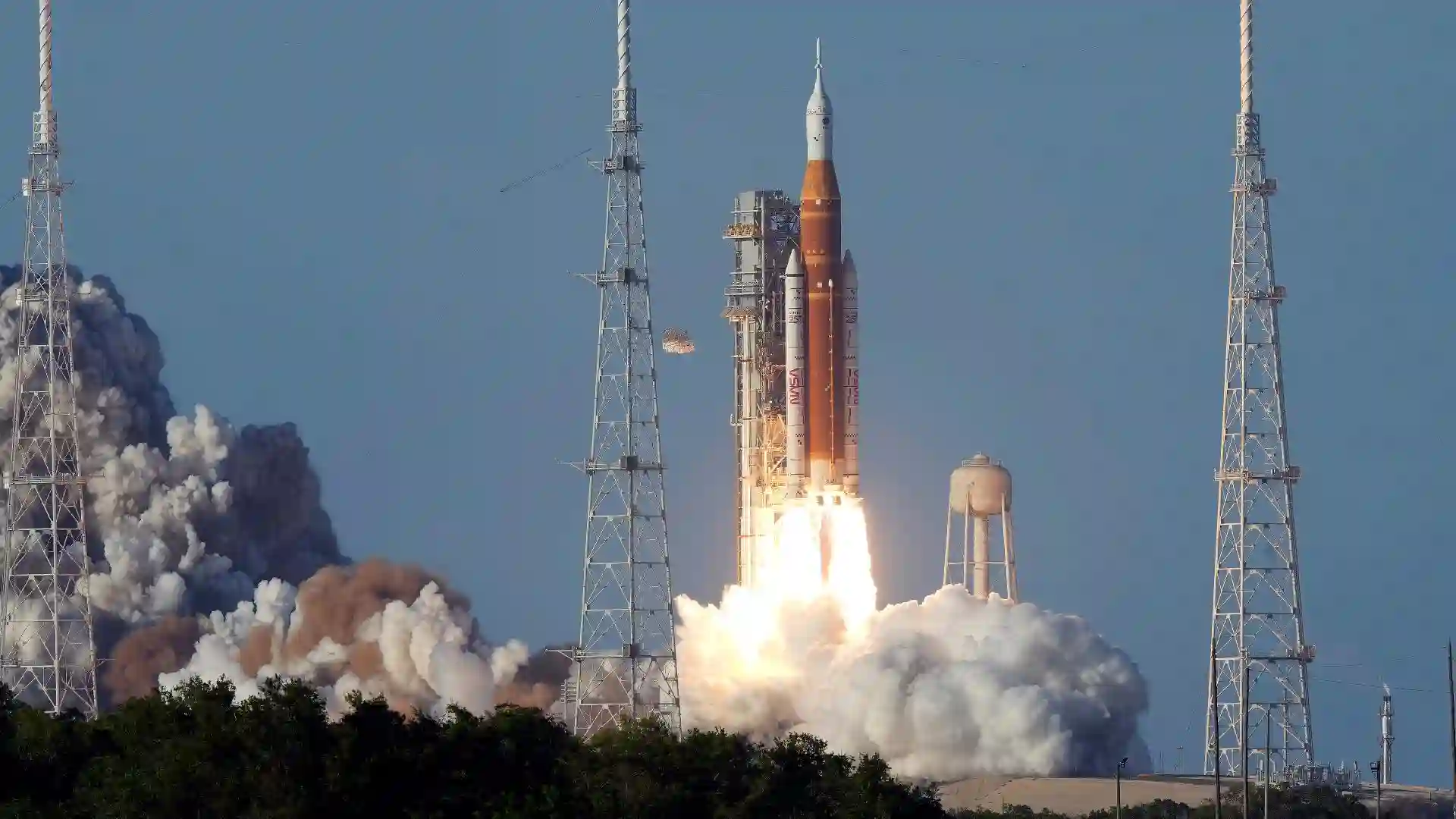
| April 4, 2026 | Launch from Kennedy Space Center | The Artemis II mission launched successfully from Kennedy Space Center. The powerful rocket carried the Orion spacecraft into orbit, marking the first crewed lunar mission since Apollo 17. |
| April 4–5, 2026 | Earth Orbit and System Checks | After reaching orbit, the crew conducted critical checks on navigation, communication, and life-support systems. This phase ensured the spacecraft was ready for deep space travel. |
| April 5, 2026 | Translunar Injection | The spacecraft performed a key engine burn known as translunar injection. This maneuver propelled Orion out of Earth’s orbit and set it on a trajectory toward the Moon. |
| April 7, 2026 | Approach to the Moon | Orion approached the Moon and entered a distant retrograde orbit path. The crew observed the lunar surface and captured images for scientific analysis. |
| April 8, 2026 | Flyby of the Moon’s Far Side | The spacecraft passed behind the Moon, temporarily losing communication with Earth. This marked one of the most critical and symbolic moments of the Artemis II mission. |
| April 8–9, 2026 | Deep Space Operations | While orbiting the Moon, astronauts conducted experiments and tested onboard systems under deep space conditions. The mission also gathered data on radiation exposure. |
| April 9, 2026 | Return Trajectory Initiated | Orion executed a burn to leave lunar orbit and begin its journey back to Earth. This maneuver ensured a precise path for re-entry. |
| April 10, 2026 | High-Speed Re-entry | The spacecraft re-entered Earth’s atmosphere at speeds exceeding 39,000 km/h. Heat shields protected the crew from extreme temperatures. |
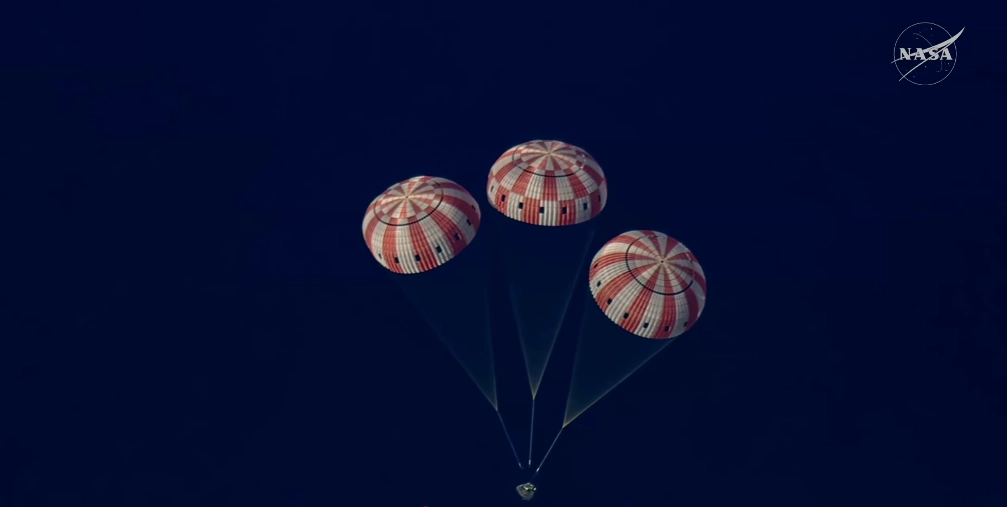
| April 10, 2026 | Splashdown in Pacific Ocean | Orion safely landed in the Pacific Ocean. Recovery teams quickly reached the capsule and assisted the crew out of the spacecraft. |
| April 10–11, 2026 | Post-Mission Recovery | Astronauts underwent medical checks and initial debriefings. NASA began analyzing mission data to support future Artemis missions. |
Understanding the Artemis II Mission Timeline
The Artemis II mission timeline shows a carefully planned series of steps. It explains how humans travelled beyond Earth orbit and returned safely. Importantly, every stage was designed to test systems for future deep space missions.
To begin with, the mission focused on safety checks and launch preparation. After that, it moved step by step through orbit, lunar travel, and finally return to Earth. Therefore, each phase played a key role in mission success.
Launch and Early Orbit Operations
First of all, the mission began with a historic launch. This was significant because humans had not left low Earth orbit for decades.
Immediately after launch, the spacecraft entered Earth orbit. Then, engineers carefully checked all systems to ensure everything worked properly. In addition, astronauts monitored life support, communication, and navigation tools.
Next, the mission performed a key engine burn called translunar injection. This maneuver was very important because it pushed the spacecraft out of Earth’s gravity. As a result, the journey to the Moon officially began.
Journey Toward the Moon
After leaving Earth orbit, the spacecraft began its long journey to the Moon. During this phase, astronauts continued system checks. At the same time, they collected scientific data from deep space.
Furthermore, the crew observed Earth from far away. This helped scientists understand how spacecraft behave outside Earth’s protective environment.
Meanwhile, mission control tracked every movement closely. Therefore, safety remained a top priority throughout the journey.
Flyby of the Moon’s Far Side
One of the most important events was the flyby of the Moon’s far side. During this time, communication with Earth was temporarily lost.
However, this was expected. Even so, the spacecraft continued its journey without problems. Shortly after, communication was restored successfully.
As a result, NASA confirmed that all systems were functioning correctly. This moment was important because it proved that the spacecraft could handle deep space conditions.
Return Journey to Earth
After completing the lunar flyby, the spacecraft began its return journey. At this stage, the mission shifted focus from exploration to re-entry preparation.
Next, engineers guided the spacecraft into the correct path back to Earth. This step was very important because even small errors could affect landing safety.
In addition, astronauts prepared for re-entry procedures. Therefore, every system was double-checked to ensure a safe return.
Re-entry and Safe Splashdown
As the spacecraft entered Earth’s atmosphere, it faced extreme heat and pressure. Because of this, the heat shield played a critical role in protecting the crew.
Even though conditions were harsh, the spacecraft performed very well. It continued to protect the astronauts throughout re-entry.
Afterward, parachutes opened to slow the capsule down. Finally, the spacecraft splashed down safely in the Pacific Ocean.
Immediately, recovery teams arrived at the landing site. As a result, the astronauts were confirmed safe and in good health.
Why the Artemis II Mission Timeline Matters
The Artemis II mission timeline is important because it shows how each stage supports safe space travel. In fact, every step was carefully tested to prepare for future missions.
Moreover, the mission provides valuable data for NASA. This information will help improve future spacecraft systems. In particular, it will support Artemis III, which aims to land astronauts on the Moon.
In addition, the mission highlights international cooperation. For example, the involvement of the Canadian Space Agency shows that space exploration is a global effort.
Conclusion
In conclusion, the Artemis II mission timeline demonstrates careful planning and successful execution. Each stage—from launch to splashdown—worked as intended.
Most importantly, the mission shows that humans are ready to travel deeper into space again. Therefore, it brings us closer to future Moon bases and even missions to Mars.
👉 Learn more about NASA’s Artemis program: https://www.nasa.gov/artemis
Discover more from Kenya News Updates
Subscribe to get the latest posts sent to your email.

 Maxwell Aliang'ana