Maxwell Aliang'ana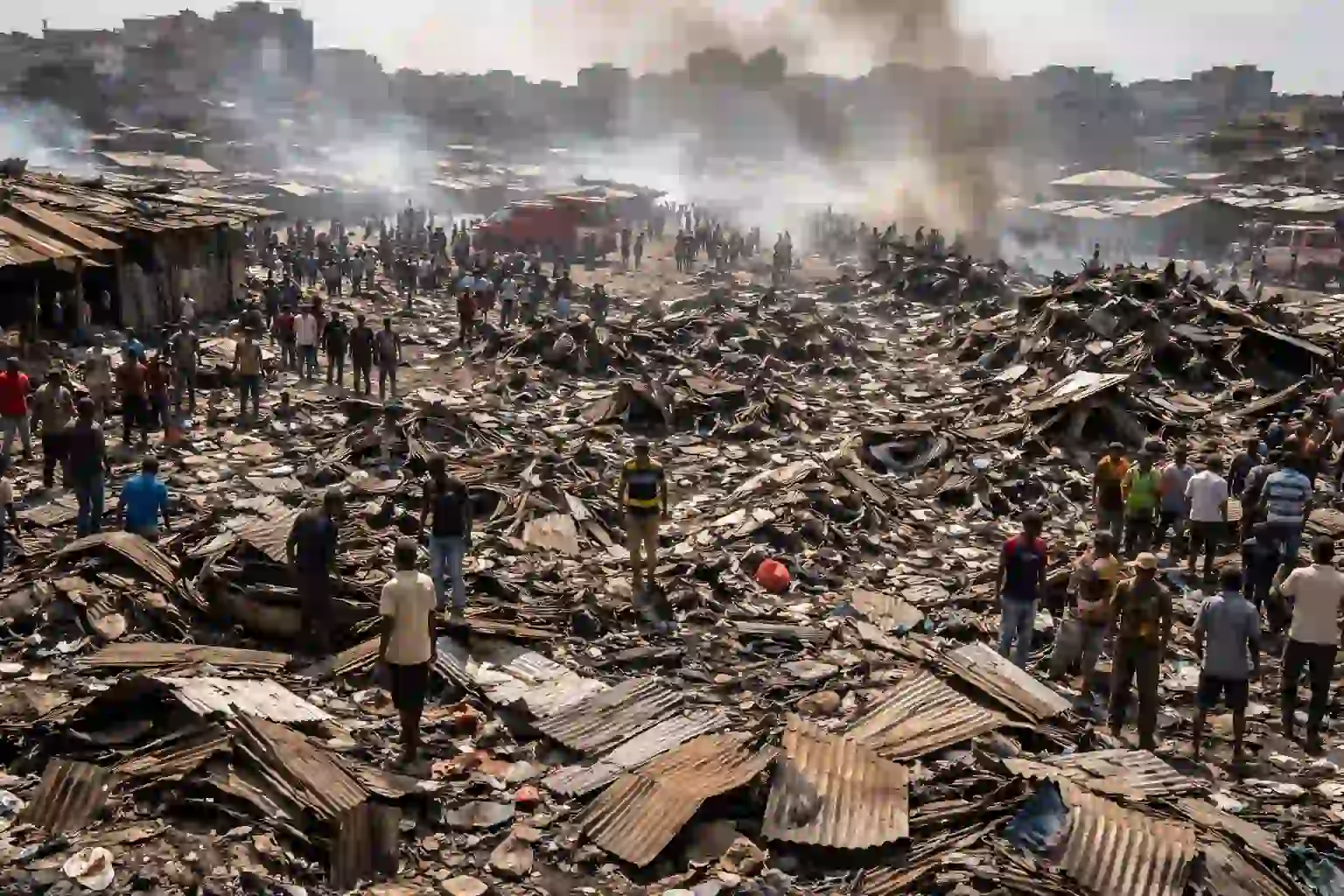
If you know Gikomba Market, you know it never truly sleeps. By 4 a.m., biashara is already alive—bales being opened, voices bargaining, chai brewing somewhere in the corner. But this time, biashara didn’t wake up. Instead, traders woke up to dust, twisted iron sheets, and silence where their stalls once stood.
Overnight, a section of Gikomba was brought down after an eviction notice expired. No warning sirens. No last-minute negotiations. Just bulldozers doing their thing in the dark.
“Tulilala maskini, tukaamka maskini zaidi”
That’s how one trader put it. And honestly, that line hits hard.
For many people here, Gikomba isn’t just a market—it’s survival. School fees, rent, food on the table… all of it comes from those small stalls squeezed between narrow paths. So when the structures came down, it wasn’t just wood and mabati being destroyed. It was people’s hustle. Their future plans. Their daily bread.
Some traders say they knew about the eviction notice, yes—but they didn’t expect things to move this fast, especially with court matters still in play. Others insist they had no idea the demolition would actually happen that night.
Either way, the result is the same: loss.
Gikomba Is Not Just Any Market
Let’s be real—Gikomba is the plug for mitumba in Nairobi. From town boutiques to mashinani markets, many depend on what comes out of here. It’s where biashara starts small and sometimes grows into something big.
Walk through Gikomba on a normal day and you’ll see serious hustle. People negotiating like pros, others carrying huge loads like it’s nothing, and customers digging through clothes like they’re searching for treasure. It’s chaotic, yes—but it works.
That’s why any disruption here doesn’t just affect a few traders. It shakes an entire system.
So Why the Demolition?
From the government side, the reason is about reclaiming land near the river. The argument is that some structures are built too close to the water, which is risky—especially during heavy rains. Flooding, pollution, all those issues come into play.
And to be fair, that concern is real.
But here’s where the problem comes in—how it was done.
Many traders are asking: why overnight? Why not proper relocation? Why not give people a clear, workable plan? Because telling someone to move without showing them where to go next is basically telling them to start from zero.
The Bigger Problem: Hustle vs. System
This whole situation shows a bigger issue we’ve seen many times in Nairobi.
On one side, you have serikali trying to organize the city, enforce rules, and clean up spaces like riverbanks. On the other side, you have wananchi just trying to survive in a tough economy.
And the truth? These two sides rarely meet in the middle.
Instead, what we get are abrupt demolitions, protests, and stories of loss—on repeat.
The Real Cost
It’s easy to talk about structures and land. But the real cost here is human.
Think about a trader who had just stocked new clothes. Gone.
Think about someone who borrowed money (maybe even a chama loan) to expand their stall. Gone.
Think about the mama ambaye alikuwa analipa school fees kupitia hiyo biashara. Now what?
This is where things become more than policy. They become personal.
What Needs to Change?
No one is saying development is bad. Nairobi has to grow. It has to be cleaner, safer, and better organized.
But development shouldn’t feel like punishment.
If spaces like Gikomba need to be reorganized, then traders should be part of that conversation—not just victims of it. Give them time. Give them options. Give them respect.
Because at the end of the day, these are not illegal strangers—they are the same people who keep the city running.
Gikomba Will Rise Again
If there’s one thing about Gikomba traders—it’s resilience.
They’ve survived fires. They’ve survived losses. And somehow, biashara always finds a way back. Maybe smaller, maybe slower—but it comes back.
So yes, today there’s rubble. There’s frustration. There’s anger.
But give it time.
Because if Nairobi runs on hustle, then Gikomba is one of its strongest engines—and that engine doesn’t stay down for long.
watch the demolished Gikomba Section: https://www.instagram.com/reel/DWiaNbUsNoC/?utm_source=ig_web_copy_link&igsh=NTc4MTIwNjQ2YQ==
Read more news: https://www.kenyanewsupdates.co.ke/2026/03/30/sakaja-senate-summons-police-hunt/
Discover more from Kenya News Updates
Subscribe to get the latest posts sent to your email.