Maxwell Aliang'ana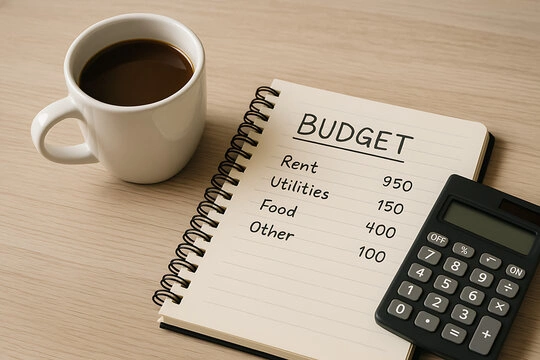
Last Updated on May 12, 2026 3:40 am by Maxwell Aliang’ana
You earn KES 20 000 a month in Nairobi, you belong to the largest group of workers in the formal and informal sector in Kenya. It’s on the pay slips of the security guards, cashiers in the supermarket, restaurant waitresses, junior office workers, and all the other people that show up every day and work with integrity—twenty thousand shillings. But the majority of financial advice you’ll find online is geared toward making money either in dollars or at least five times that amount. We’ll develop a budget that will be effective, not theoretical, to use in Nairobi: there will be compromises, the hard facts, and a sample spending plan you can put on a piece of paper or your phone notes. There won’t be any tricks, there will be no get-rich schemes, and there will be no shaming of people who didn’t eat avocado toast. It’s just a straightforward, line-by-line distribution of all of the shillings that come in.
Start with the Hard Truth: You Cannot Do Everything
Do not argue this point before we begin to write anything! In Nairobi, with the costs of KES 20,000, one will not be able to save aggressively, have money for weekly groceries, have money to send home monthly, and enjoy airtime as well, in Kilimani. Something will give. The end of the day is not to have a lavish lifestyle. The aim is to not be in any debt, to not meet that shylock and to not get in a position where a small emergency, such as a burst water pipe, a lost phone, a sudden illness, makes you need to go into a loan you cannot afford to pay back. Modest living in a lower cost area such as Uthiru, Githurai, Kayole or Rongai (but not the expensive areas) is assumed in the budget below. Assumes you cook, do not own a car and have no children to support except you. If you have a child or send money upcountry, you’ll have to make cutbacks, and we’ll point them out to you.
The Sample Budget Line by Line
Here is the complete monthly budget for KES 20,000 net pay. All figures are in Kenyan shillings.
1. Rent: KES 7,000 (35% of income)
This is where the bulk of your expenses will be. A good bedsitter in a middle density estate in Nairobi is in the range of KES 6,000 – 8,000, depending on the estate. In other areas such as Sinai, and parts of Kahawa Wendani, you can find cheaper houses, but you might not have a good garbage service, a secure house or reliable electricity. This budget is based on KES 7,000 for a self-contained bedsitter or single room sharing a common bathroom but having their own electricity meter. Don’t pay rent of more than KES 8,000 on this salary. We are all one step away from eviction if we are paying KES 10,000. Move further out. The fare increase on the matatu will affect, but not as much as sleeping on a friend’s sofa.
2. Food and Groceries: KES 5,000 (25% of income)
This will get you approximately KES 165 per day for one person. If you prepare all your meals from scratch, and steer clear of processed foods, you can eat well on this. The average diet was: Black tea with two pieces of bread (KES 30), Githeri or beans with some sukuma wiki (KES 70) for lunch and Ugali with vegetables or eggs (KES 65) for dinner. Maize flour, beans, sukuma wiki, onions, tomatoes and carrots are purchased from open air market and not the supermarket. Bring own lunch to work in lunchbox. You drink water from a kettle and not bottled water. Never do you purchase juice, soda or snacks at a kiosk. If followed religiously, this will require only KES 5,000. You can purchase mandazi at the bus stop, or eat chips once a week, and you will be running out by the 25 of the month. Plan meals & snacks on Sunday for the week.
3. Transport: KES 3,000 (15% of income)
If you reside in Rongai and you have to venture to the city centre, you are in for at least KES 200 for matatus fare per day—KES 6000 per month which is a huge blow to your budget. Or move closer to the job and/or job closer to the home. This is based on spending KES 100 on matatu fare per day which works out to KES 3,000 monthly (with one day off in a fortnight and Sundays at home). This can be done by walking 15 minutes to another cheaper matatu stage, instead of taking a direct route. This could be someone living in Donholm and working in Industrial Area or someone living in Kawangware and working in Westlands. You get up too early to evade the tolls on rush hour, never ride an Uber, not even for KES 150 and don’t need to change matatus for the final kilometer of the walk. Other months, you’ll save more and may be able to carry the balance over to your savings account.
4. Electricity and Water: KES 800 (4% of income)
For a bedsitter with a single bulb, phone charging, a small cooker or jiko, and maybe a tiny fridge if you are lucky, prepaid electricity should average KES 500 to KES 700. Most estates charge KES 200 – KES 300 per person for water. Keep your cooker usage low: boil water once in the morning and reheat food at night instead of cooking fresh each time. Unplug charger when it is not being used. Avoid turning on a radio or TV while sleeping. If you are careful, this’s a realistic KES 800.
5. Airtime and Data: KES 800 (4% of income)
You have to use a phone for work – to communicate with your employer, to look for work, emergency calls to the family. However, you don’t need to watch TikTok marathons or YouTube videos. This budget assumes that you are paying around KES 100 per week for 1GB of data (this is available at some networks) per month, which will total KES 400 a month. The rest of the KES 400 is used for voice calls and SMS, primarily for business and necessary family communications. Utilize WhatsApp calling during the time you’re at work or friend’s home with Wi-Fi. Don’t play music or video. Download all the required files while you’re connected to the free Wi-Fi. If your workplace has a wireless Internet connection, make full use of it.
6. Personal Care and Hygiene: KES 500 (2.5% of income)
This includes soap, toothpaste, detergent, sanitary pads (where appropriate), toilet paper, and one simple haircut a month, or a small visit to the Barber shop. Purchase soap in bar form (not liquid). Purchase detergent packaged in a kiosk, not in a brand name package. When purchasing sanitary products, make sure to get the least expensive, but reliable, brand and not the cheapest that leaks. If you are male, a KES 100 haircut every three weeks means that you have KES 200 for soap and detergents. Ensure nails are kept clean and clothes washed. Don’t miss out on job prospects and health due to lack of hygiene.
7. Emergency and Irregular Expenses: KES 1,000 (5% of income)
This money is stored in an envelope or another M-Pesa savings account. You only touch it when it’s not monthly but it’s something that’s guaranteed to happen: a pair of old shoes needs to be repaired, a blanket for the cold months, a new charger or a cheap headset, a visit to a public clinic when you get the flu, contribution to a colleague’s wedding or a neighbour’s funeral. KES 1,000 per month builds to KES 12,000 per year. That is the money that would pay for buying a second hand phone, a serious visit to the clinic, or a long matatu journey home for Christmas. This category is essential as without it, any irregular expenditure will be a loan.
8. Small Savings for a Goal: KES 1,000 (5% of income)
This is not an emergency fund! This is the money you put away for a good thing, something you plan to do in the future, such as a deposit towards a slightly better bedsitter six months from now, a course of action to improve your skills (such as a second-hand clothing or vegetable stalls, KES 5,000 computer package at a local cyber), or a small business venture you’ll be doing in the future. Deposit this amount of KES 1,000 in a locked or not easily opened physical box or M-Shwari KES 1,000 deposit box. Avoid the use of the expression “a rainy day” which is too ambiguous to be used as a savings target. Name it: “Mara moja hustler fund” or “certificate money.” With the number increasing you feel hope. That hope keeps you on track with the rest of the budget.
What Gets Sacrificed on This Budget
KES 20 000 is not enough to buy a lot of things that people think are commonplace. Meat and chicken are forbidden from being eaten, unless eaten monthly as a reward. Unless clothes are worn to shreds then don’t purchase new clothes. You don’t drink alcohol. You are not an avid Netflix or streaming fan. No newspapers or magazines are purchased. You won’t pay money to your parents each month, but instead you pay them a lump sum when you accumulate money from your emergency or savings category, don’t go to all of your friend’s birthday parties. You don’t have to pay a fee to join a gym. You’re walking to exercise. All these sacrifices are not for eternity. These are for this time in your life.
How to Track This Budget Without an App
Use a small notebook or the note-taking app on your cell phone. Write the 8 categories for the above. Note the amount spent on the category each time you spend money. Total up spendings for the day at the end. At the end of the week, examine and see if there is any area where you are going over your budget. The most frequent leak is food – purchasing prepared food from a service provider, rather than bringing lunch. The second common leak is transport – that is, a costlier matatu that you would have taken when late.
A Final Word on Debt
This budget will be even more difficult if you already have a loan from a shylock or digital lender. It’s possible that a payment schedule or financial assistance from family will be necessary to pay off the principal. Don’t use a new loan to pay rent or food. It’s better to miss a meal than be embarrassed in front of your employer by a creditor who calls him or her. As a result of this budget, you will be able to save KES 6,000 in your emergency envelope and KES 6,000 in your savings goal after six months. The fact that the exchange rate is KES 12,000 means that your relationship with money has changed. You don’t react anymore. You begin to plan things out. In Nairobi, on KES 20,000, it’s only by being intentional that it works.
Discover more from Kenya Financial Updates
Subscribe to get the latest posts sent to your email.