Maxwell Aliang'ana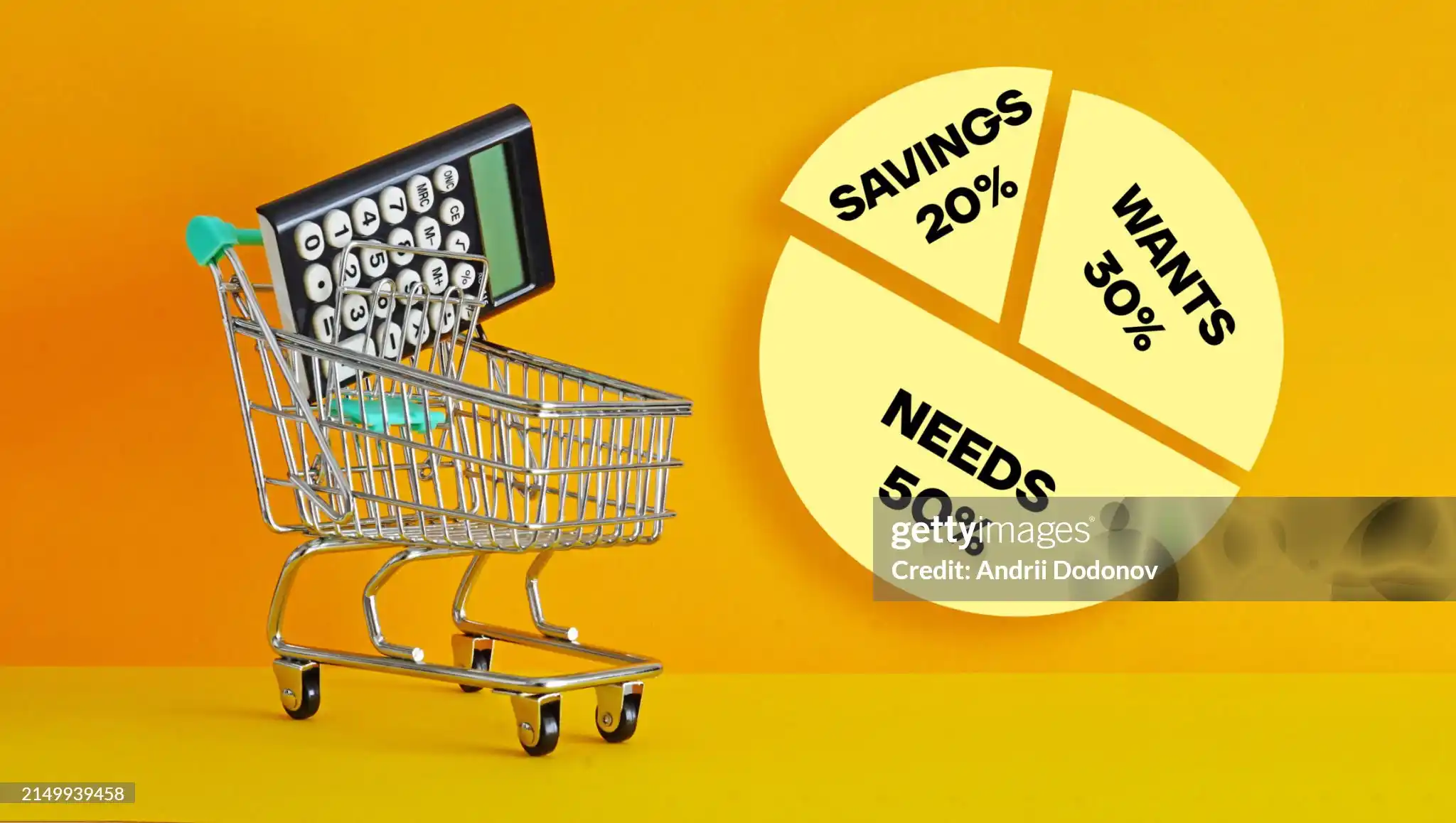
Last Updated on May 17, 2026 1:14 am by Maxwell Aliang’ana
Why Kenyans Need a Simpler Budget
The current economic times in Kenya have made life more and more expensive, bank lending rates are still more than 12 per cent, and the purchasing power of the shilling appears to be constantly changing, financial discipline has become the only option. However, budgeting is still a daunting task for many Kenyan salaried employees, casual workers and even hustlers with their side businesses. Simply use the 50/30/20 rule, a simple and intuitive rule by US Senator Elizabeth Warren and her daughter Amelia Warren Tyagi. This was meant for the middle class in the USA but can if applied carefully and locally, it can be a potent remedy in Kenya’s hands to help end the monthly “where did my salary go” game. This article analyze the 50/30/20 rule, explores how this works in typical Kenyan income brackets and discusses the challenges in today’s economy ranging from chama contributions to harambee demands that arise in the event of an emergency.
What Exactly Is the 50/30/20 Rule?
The basic concept of the 50/30/20 rule is a budgeting method with three basic buckets that represents a percentage of your net pay (after-tax income). The first bucket or 50% of net income is for needs, which are the basic essentials for living and maintaining one’s employment. The second bucket is for Wants – discretionary spending that improves the quality of your life but is not necessary, 30 percent. The third bucket (20%) is for paying down debt and saving for financial resilience and minimizing high-cost debt. The simplicity is not just in the accounting of this system, it’s in the concept: You put your money towards these three big things first, before you put it towards anything else.
A Worked Example for a Typical Nairobi Earner
Let’s take for instance a typical middle level professional who earns Ksh 70,000 per month on average. This works out to a net pay of KSh 56,045, after deducting PAYE of about KSh 10,500, SHIF at 2.75 per cent (KSh 1,925), NSSF Tier 1 (KSh 480) and the Housing Levy (KSh 1,050). According to the 50/30/20 rule, KSh 28,022 will go towards needs, KSh 16,814 for wants, and KSh 11,209 for savings and debt repayment. This calculation is immediately going to expose a problem for many of those who earn in Nairobi. Ksh 28,000 for needs could be enough for an individual residing in a moderate house in Kahawa Wendani, Thika Road or Kitengela, not to mention for a household with dependents.
The Needs Category and Why It Exceeds 50 Percent for Many Kenyans
The original American model lists insurance, minimum debt payments, transport to work, basic groceries, utilities, rent and/or mortgage payments as needs. The list is longer for Kenyans, and the costs are more often a bigger percentage of income. Rent is the silent budget killer! A decent 1 bedroom in Ruiru, Rongai or Syokimau in Nairobi satellite towns ranges from KSh 10,000 to 15,000 per month. The rent of a non-shared studio in a safer neighborhood such as Donholm or Umoja could be KSh 8,000 – 12,000. That rent takes up 30-50 percent of the budget of our hypothetical needs, KSh 28,000, as soon as we begin using it. Electricity costs will be KSh 1,500 – 3,000 for a token meter plus standing charges, water will be KSh 500 – 1,000, and cooking gas will be KSh 2,000 – 3,000 every six weeks, which is a monthly cost. The realistic utilities will be KSh 1,500 – 3,000 for Electricity (token meter plus standing charges), KSh 500 – 1,000 for Water, and KSh 2,000 – 3,000 for Cooking Gas (every six weeks, which is a monthly cost).
Another important outlay is the cost of commuting to work. The cost of a matatu service from Ongata Rongai to Nairobi CBD is approximately KSh 200 per day, two times a day (KSh 4400 per month with twenty two working days). The fourteen-seater or paying for the SGR plus a bus on Mombasa Road increases the cost. If you have a car loan, fuel and parking will easily cost KSh 10,000 or more. In our case, transport can’t be more than KSh 5,000 so as to remain within the KSh 28,022 needs bucket. At the very least, food is a major portion as well. One Kenyan person consuming ugali, sukuma wiki and eggs may spend KSh 6,000-8,000 per month on the food at a local open air market. When you start purchasing it at Ksh 10,000 once a week at Naivas or Quickmart, then you have to add some meat twice a week, the figure rises to Ksh 10,000 or even Ksh 12,000. Medical emergencies, as low as KSh 500 for a clinic visit, school fees for one child in a low-cost private school add up monthly, and black tax to support parents or siblings makes it easy to see that the need for the lower middle class Kenyan is often 60 to 70 per cent of their monthly income, not 50 per cent, as many people would hope.
Practical Adjustments for Kenyan Earners
The 50/30/20 rule is not law, but a guideline to follow. For the typical Kenyan earning between KSh 40,000 and KSh 80,000 net, a 60, 25, and 15 split or a 55, 25, and 20 split may be more realistic. But the discipline still stands, since the fixed percentages compel one to consider trade-offs. If it takes up 65 % of your income, then your wants have to be reduced to 15 % and your savings to 20%. No eating out, no Spotify premium, no outings at K1 Club and no new clothes beyond replacement. Only radical changes in lifestyle can make a significant drop in needs to 50% . You can rent a double room in a communal house for KSh 6,000 per month. If you are working in the vicinity of the city centre, one could commute using the SGR. You need to prepare all the meals – not even kahawa at Java or mutura from the roadside which are “wants” not “needs.” Another aspect is to be entirely open with close family about the black tax and agree on a fixed, modest sum of money per month – not acceding to irregular demands.
The Wants Category and Where Kenyan Lifestyles Leak Money
Wants are any costs that are not necessary for survival or for people to get their jobs done. The 30% bucket is quite often the first to be misallocated by Kenyans who think everything is a need. Some of the classic local examples of wants are entertainment such as Friday kangumu at a local club which costs KSh 2,000 to KSh 5,000 per night or buying rounds of keg or spirits can also cost KSh 2,000 to KSh 5,000 per night. Subscription services such as Netflix, Showmax, Spotify and DStv cost an extra Ksh 1000 to 3000 per month. The cost of lunch at the food court is KSh 500 to KSh 1,000 per day as compared to packed lunch. Beyond basic work data, unlimited bundles for streaming YouTube, scrolling through TikTok’s videos and viewing WhatsApp videos are also desired. The cost of fashioning is KSh 1,500 to KSh 4,000 monthly which includes new shoes, kitenge outfits and going to the salon. For many low income earners, their gambling on SportPesa, Betika or lottery tickets is a significant leak. When your wants are more than 30 percent (or more than your adjusted percentage), you’re robbing your future. For instance, instead of purchasing a KSh 400 espresso every day, purchase a KSh 200 kahawa chai once a week as a ritual. Use the same phone for three years rather than every eighteen months and add the money saved to the 20% bucket.
The 20% Savings and Debt Repayment Bucket
For most Kenyans, this category is the most violated. The 20 percent in Kenya should be divided into three sub-buckets. The top priority is the emergency fund which is at least 20 percent or 10 percent of net income. Save until you have three to six months of needs expenses. For our KSh 56,045 earner, three months of needs at KSh 28,000 each would be KSh 84,000. If the person saves KSh 5600 per month into the emergency fund, it will take him/her 15 months to achieve that objective. Don’t keep this fund in your bank account or M-Pesa, but in a high interest money market fund like Cytonn, CBA Loop or Sanlam so you don’t get tempted to spend it.
Up to half of the 20 percent can be allocated to paying off high-interest debt (the second half of the 20 percent bucket). The digital lenders in Kenya, such as Zenka, Tala, Branch and Fuliza, levy an effective interest rate of between 15 percent and 30 percent per month. 14-18 per cent a year is the cost of even bank overdrafts. This type of debt is a definite sure thing with a higher return than just about any other investment option. With Fuliza debt, it is advisable to use all the 20 percent bucket to pay off the debt before you save any money. The third one is long term investment and this is where you focus when you have paid off your debts and created your emergency fund. With KSh 1,000 , there are options such as Treasury bills and bonds offered on the CBK’s Dhamana platform, which come with no risk and pay about 12 to 15 % returns. Money market funds have a 7% to 10% annual return, and are highly liquid. Saccos let you make a minimum deposit of KSh 5,000 each month and are eligible for low interest loans. Chamas can work, but not consumption chamas who purchase land and then do not get it properly titled, but only those investment chamas which have written bylaws and are well run.
A Detailed Case Study of a Kenyan Earner
Let us follow Mary who lives in Ruiru, and works in Westlands, aged 28. Her gross monthly income is KSh 70,000 which is equivalent to KSh 56,045 after deduction as shown above. On payday, Mary sets up automatic transfers. She invests KSh 11209 in a money market fund in which she deposits her savings. She has Ksh 28,022 in her main bank account for needs. Mary transfers KSh 16,814 to a secondary account or to a separate line of M-Pesa that is just for wants. Mary’s needs budget is KSh 28,022 she uses KSh 12,000 for a one-bedroom apartment at Ruiru. She saves KSh 1800 for the electricity token and standing charge. Her monthly water and gas bills are on average Ksh 2500. She charges KSh 6,000 per passenger on her express service from Ruiru to Westlands. Mary spends Ksh 7,000 in the open market for food stuffs excluding meat which is Ksh 1,000 per week. She spends the rest of the Ksh 2,722 on phone calls and home internet, which she can manage.
Mary has budgeted KSh 16,814 for her wants, she uses Safaricom home fibre using 50 gigabytes, for data to stream content. She spends KSh 2000 on her hair and grooming. Mary goes out for a nice meal once a week at KSh 600 each, which is KSh 2,400 for the month. She saves KSh 1,100 for Spotify and Netflix. Her allowance for buying new clothing is Ksh 2,000. She has Ksh 3,314 remaining for other miscellaneous expenses in case she needs to come back or goes out of impulse to buy coffee. Leaving over money at the end of the month carries over to the next month’s wants or into savings. Mary saves KSh 11,209, putting KSh 5,600 into her emergency money market fund, KSh 3,000 into her SACCO share capital and KSh 2,609 into her fund of money for holidays and gadgets, which also has a specific purpose. This budget is for Mary, as long as she is able to avoid lifestyle creep, and keeps her wants limited to Ksh 16,814. But as soon as she purchases a KSh 30,000 phone on credit, the whole thing is compromised.
Unique Kenyan Challenges That Require Further Adaptation
The main challenge is the extended family responsibilities, known as black tax, which is a challenge that is peculiar to Kenya. This is a need but it must be capped. Set aside a specific amount, say KSh 3,000 a month, in your needs category. Discuss with your family why you are doing a structured budget. Kenyans are becoming more aware of the fact that the practice of unlimited black tax does not end poverty for the giver or the receiver since the giver will not be able to save and the receiver will become dependent on the giver.
Conclusion: Why the 50/30/20 Rule Still Works in Kenya
There isn’t a single budget rule that is suitable for all Kenyans, but the 50/30/20 rule can offer more than accuracy. It provides focus and gives a negotiation with yourself. Get your M-Pesa statement today, do your calculations to know how much you actually made and allocate your next salary before you get it. You will be glad you did, later on!.
SACCO vs Bank Savings: Which Is Better for Kenyans in 2026?
Discover more from Kenya Financial Updates
Subscribe to get the latest posts sent to your email.